



Explore secondary teacher demand, salaries, and migration opportunities in Australia—plus state-by-state job prospects and FAQ for 2025.
Introduction
Australia faces a rising demand for qualified secondary school teachers, with a projected need for over 23,000 new educators by 2034 and shortages hitting sooner in some states. The evolving education sector and skilled migration routes create strong opportunities for aspiring teachers in Australia for 2025.
Teacher Demand: Nationwide and State-by-State Insights
The Australian education landscape is marked by persistent teacher shortages, especially in secondary schools. Four countries in the OECD report higher teacher shortfalls than Australia, but local numbers are climbing. Government figures show that classes typically have up to 30 students, intensifying the need for effective classroom management and quality teaching. In New South Wales alone, policies aim to attract at least 2,500 new certified teachers by 2025, reflecting broader national strategies. Victoria and Queensland, driven by population growth, also prioritize hiring more secondary teachers for STEM, special education, and English subjects. Remote and rural areas in Western Australia, South Australia, and the Northern Territory face the biggest shortage, with incentives such as relocation grants and housing support improving recruitment potential.
Salaries for Secondary School Teachers in Australia
Salaries for secondary school teachers in Australia range between AUD 70,000 and AUD 85,000 annually for base roles, and can exceed AUD 100,000 for experienced teachers or those in leadership positions. New South Wales, Victoria, and Western Australia offer some of the highest entry-level wages. For instance, NSW is piloting a program promising up to AUD 11,000 in bonuses for teachers meeting accreditation targets. On average, metropolitan schools provide slightly higher salaries than rural schools, although regional positions may include additional benefits. Factors influencing pay include years of experience, postgraduate qualifications, specializations, and leadership responsibilities. Salary progression occurs annually with performance reviews and increased classroom duties, meaning long-term prospects remain favorable for committed professionals.
State-by-State Secondary Teaching Opportunities
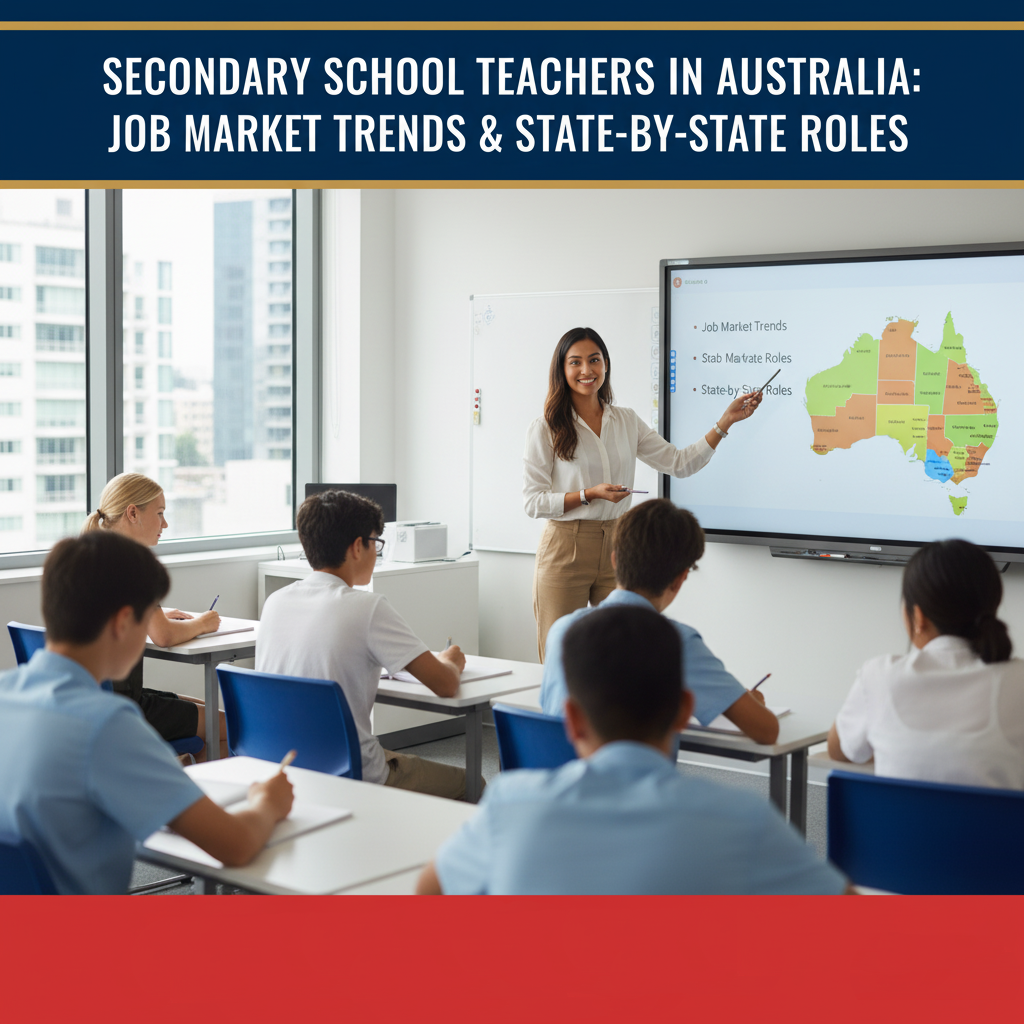
Teaching jobs and shortages vary widely by region. State-by-state breakdown:
- New South Wales (NSW): The largest number of vacancies; strong support for STEM, English, and special education teachers, especially in outer Sydney and rural districts.
- Victoria (VIC): Major cities like Melbourne show high recruitment, with incentives for positions in regional areas such as Ballarat and Bendigo.
- Queensland (QLD): Consistent growth in both urban and regional job offers, driven by population increases; secondary science and math teachers are in high demand.
- Western Australia (WA): Both Perth and the northern mining towns present job openings, particularly for teachers willing to relocate.
- South Australia (SA): The government prioritizes hiring for small towns and Indigenous communities, supporting language and arts teachers.
- Tasmania (TAS): Fewer jobs overall, but specialist teachers find steady opportunities in Hobart and Launceston.
- Northern Territory (NT): Critical shortages—highest incentives for rural placements and teaching Indigenous students.
- Australian Capital Territory (ACT): Stable opportunities with competitive salaries, especially for experienced educators.
This geographic diversity means teachers can target areas with the best fit for their lifestyle, subject expertise, and career goals.
Skilled Migration Pathways for Teachers in Australia
Australia has optimized migration channels for qualified secondary school teachers due to persistent shortages. The main skilled migration programs include:
- Skilled Independent Visa (subclass 189): Allows teachers to apply based on points for age, qualifications, and English proficiency, without need for state sponsorship.
- Skilled Nominated Visa (subclass 190): Teachers are nominated by a specific Australian state, typically committing to live and work there for two years or more.
- Regional Sponsored Migration Scheme (subclass 491): Enables teachers to live and teach in regional or rural areas, often granting additional migration points and financial support.
All programs require teachers to have recognized university degrees, at least one to three years of teaching experience, and pass English language assessments. Overseas credentials must be accredited through bodies like the Australian Institute for Teaching and School Leadership (AITSL). Teachers who complete relevant qualifications and pass registration assessments enjoy strong chances for permanent residency and career growth.
Teacher Shortage Areas and Targeted Opportunities
Shortages are most acute in STEM subjects (science, technology, engineering, mathematics), English, special needs, and Indigenous languages. State governments offer targeted scholarships, relocation allowances, and career development programs to attract secondary teachers in these areas. For example:
- NSW and QLD: Outreach to international and interstate teachers to fill gaps in secondary math and science.
- Remote WA and NT: Teachers for Indigenous communities are in especially high demand, with language and culture training provided.
- Victoria: Focus on inclusion, hiring more special education teachers with incentives for work outside Melbourne.
- South Australia: Recruiting foreign language teachers for under-served communities.
International applicants with in-demand expertise boost their chances by pursuing regional placements, additional certifications, or subject specializations.
The Future of Secondary School Teaching: Trends and Prospects
Australia’s secondary teaching sector is evolving. In addition to base teaching roles, new positions in curriculum development, educational technology, and student welfare are emerging. Teachers with digital skills or mental health and wellbeing competencies find expanding prospects, especially as remote learning and innovative teaching models take root. Government reforms continue to stress professional development, lifelong learning, and accreditation upgrades. By 2025, teachers who combine subject mastery with adaptability and commitment to ongoing training will enjoy the best job security and career satisfaction.
Conclusion
Australia’s secondary education sector faces clear challenges and opportunities, particularly for qualified teachers looking to build impactful careers. High demand and competitive salaries meet targeted migration and career development pathways in every state. For those committed to professional growth, 2025 marks an ideal time to pursue secondary school teacher jobs in Australia or migrate for state-by-state teaching prospects.