




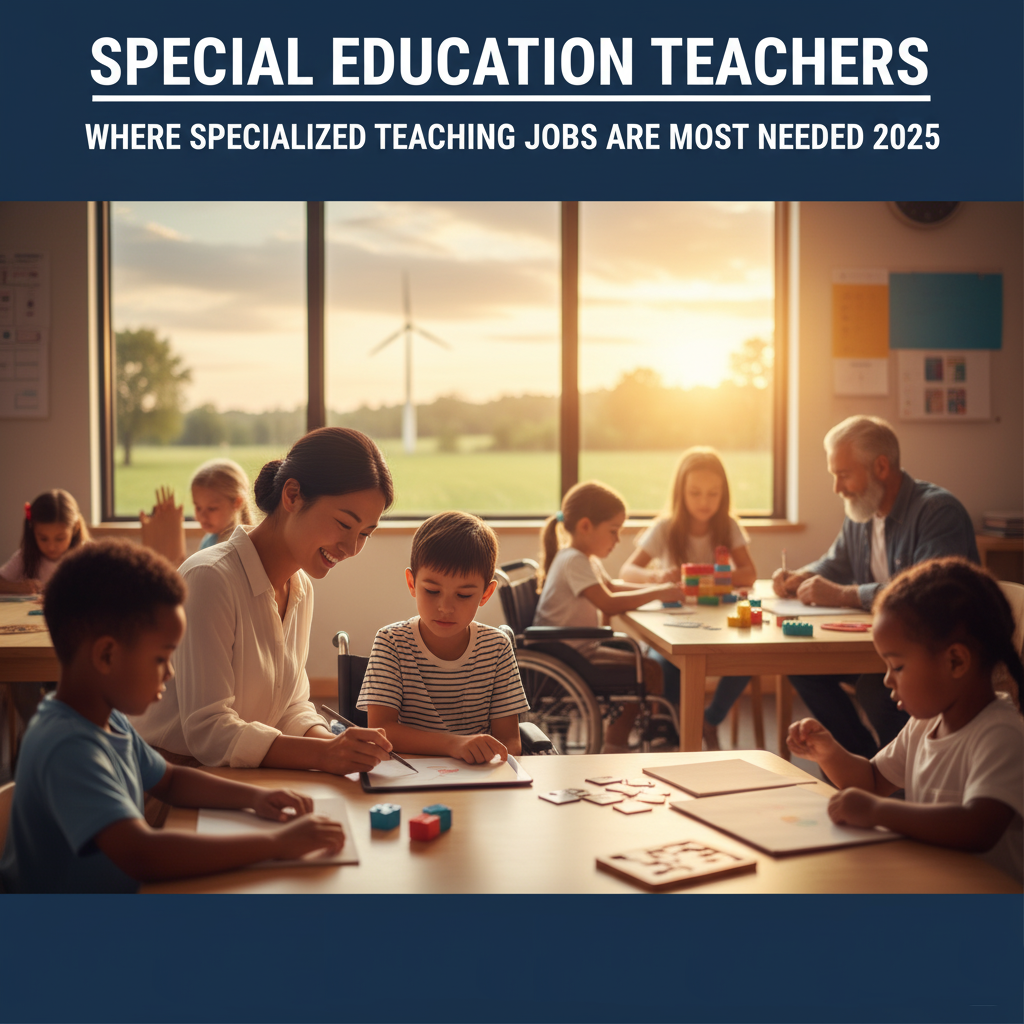
Discover the growing demand, skilled migration pathways, and regional opportunities for special education teachers in Australia in 2025.
Introduction
Australia faces a critical shortage of special education teachers, especially in regional and remote areas where specialized teaching roles are most needed. This article explores the challenges immigrants face entering this field, outlines visa pathways, and highlights the best locations and career opportunities for special needs educators in 2025.
The Problem Immigrants Face: Barriers Entering Special Education Teaching
Despite increasing opportunities, immigrants aiming to work as special education teachers in Australia confront significant barriers. Foreign teaching qualifications often require rigorous assessment and alignment with Australian standards set by the Australian Institute for Teaching and School Leadership (AITSL).
Many newcomers must complete bridging courses or supervised teaching practice to become fully accredited. Demonstrating experience with Australia’s diverse student populations, including those with disabilities such as autism or sensory impairments, is challenging without local references.
Language proficiency and cultural understanding are vital to effectively communicating with students, families, and interdisciplinary teams. Additionally, specialized training in individualized education plans (IEPs) and inclusive classroom strategies is expected.
Regional and remote schools, which have acute teacher shortages, often struggle to attract and retain qualified special education teachers due to geographic isolation and fewer amenities. Immigrant teachers must overcome these challenges alongside complex visa and migration requirements to secure roles.
The Solution: Skilled Migration Pathways for Special Education Teachers
Australia prioritizes special education teachers on its Medium and Long-Term Strategic Skills List (MLTSSL), facilitating skilled migration options:
- Skilled Independent Visa (Subclass 189): Points-based visa granting permanent residency without sponsorship, ideal for qualified teachers with competitive points.
- Skilled Nominated Visa (Subclass 190): Requires nomination by an Australian state or territory, often with incentives for settling and teaching in regional areas with shortages.
- Skilled Work Regional (Provisional) Visa (Subclass 491): For those willing to live and work in designated regional zones, with a pathway to permanent residency after three years.
- Temporary Graduate Visa (Subclass 485): Allows recent Australian graduates to gain valuable work experience before applying for permanent visas.
- Employer Sponsored Visas (Subclass 482 and 186): Enable migrants with job offers to transition into Australian teaching roles.
Successful migration requires positive skills assessment through AITSL, proving qualification equivalence, teaching competence, and readiness to work with special needs students.
Engagement in Australian professional development, cultural competence training, and mentoring enhances immigrant teachers’ prospects for employment and career advancement.
Demand for Special Education Teachers by Region
Significant gaps exist in special education staffing across Australia’s states and territories, with regional and rural areas under pressure to meet the needs of students with disabilities and learning difficulties.
Key regions with high demand include:
- New South Wales and Victoria: Urban and regional schools require special education specialists across mainstream and dedicated support units.
- Queensland and Western Australia: Regional towns have growing enrolments in special needs programs, amplifying recruitment urgency.
- Tasmania and South Australia: Smaller education departments actively promote relocation incentives for migrant special education teachers.
Government programs emphasize recruiting in geographically isolated communities to bridge disparities in educational access. Tailored support services and salary benefits promote retention in these high-need areas.
Career Opportunities and Highest Paying Jobs
Special education teachers engage in direct classroom teaching, curriculum adaptation, collaboration with therapists, and policy development.
High-paying roles often involve senior specialist positions, program coordination, or leadership in inclusive education initiatives, with salaries ranging typically from AUD 75,000 to over AUD 100,000 depending on experience, location, and qualification levels.
Specialist areas such as autism spectrum disorder, hearing or visual impairment education, and behavioral support command particularly strong demand and remuneration.
The profession offers rewarding pathways into education consulting, advocacy, professional training, and academic research for experienced candidates.
Action Steps to Get Started
For migrants targeting special education teaching roles in Australia:
- Verify and Obtain Qualifications: Ensure teacher registration and qualifications align with AITSL standards for special education.
- Complete Skills Assessment: Secure a positive skills assessment from AITSL confirming competence to teach in Australian schools.
- Select Suitable Visa Pathways: Consider Skilled Independent (189), Nominated (190), Regional (491), Graduate (485), or Employer Sponsored options.
- Gain Local Experience: Participate in internships, substitute teaching, or community education to build local credentials.
- Focus on Regional Opportunities: Explore vacancies in regions with critical shortages, benefiting from government incentives.
- Engage in Professional Development: Take Australian-based continuing education courses focused on special needs pedagogy and cultural competence.
- Network with Peers and Agencies: Connect with teaching networks and recruitment agencies catering to migrant educators.
Conclusion
Special education teachers are crucial to Australia’s inclusive education goals, especially in regional areas facing staff shortages. Although immigrants face hurdles, government-supported skilled migration pathways and expanding regional opportunities provide promising avenues. With credential recognition, local experience, and regional focus, migrant special education teachers can thrive and make meaningful impacts in 2025 and beyond.