




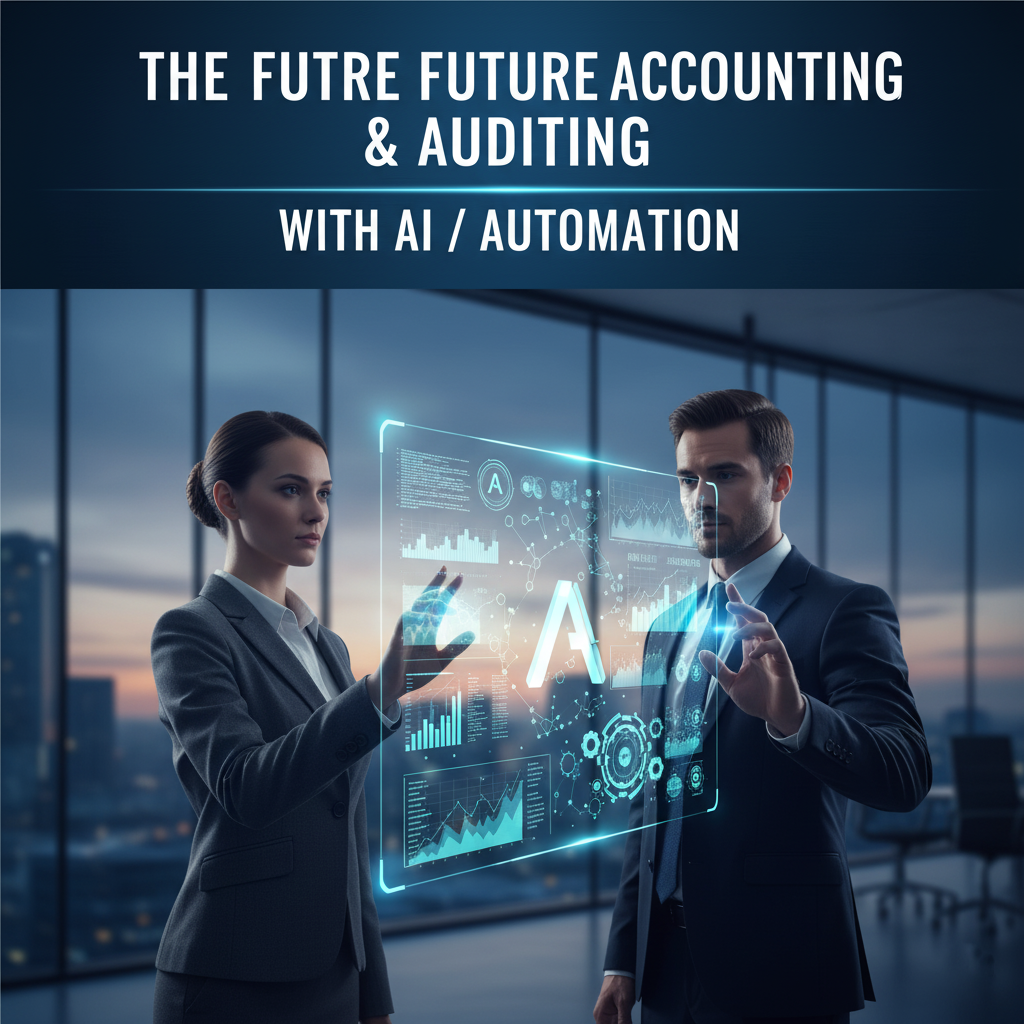
Explore how AI and automation in auditing and accounting boost efficiency, accuracy, and compliance. Learn about AI tools, trends, and challenges shaping the industry.
Introduction
The accounting and auditing industry is undergoing a seismic shift, with 85% of accountants using AI tools in 2025, per a PwC report. AI in accounting and automation in auditing streamline processes, enhance accuracy, and reduce costs. From AI bookkeeping to predictive analytics in accounting, technology is redefining roles and workflows. This article explores how AI and automation are transforming the future of accounting, key tools driving change, and challenges to navigate.
AI and Automation in Accounting: Key Applications
AI-driven accounting is revolutionizing traditional tasks by automating repetitive processes and enhancing decision-making. Here’s how AI and automation are applied:
- AI Bookkeeping: Tools like QuickBooks and Xero use AI to automate data entry, categorize transactions, and reconcile accounts, saving hours of manual work.
- AI Tax Preparation: AI systems analyze tax codes and optimize filings, ensuring compliance and identifying deductions. Platforms like TurboTax leverage AI tax preparation for efficiency.
- Predictive Analytics Accounting: AI forecasts cash flow and financial trends using historical data, helping businesses plan strategically. Tools like Sage Intacct offer predictive insights.
- Automated Financial Reporting: AI generates real-time financial statements, reducing errors and turnaround time. This supports automated financial reporting for faster decision-making.
- Robotic Process Automation Accounting: RPA handles repetitive tasks like invoice processing, freeing accountants for strategic roles.
These applications improve AI accounting efficiency by reducing manual effort and enhancing accuracy, allowing professionals to focus on advisory roles.
Automation in Auditing: Transforming Compliance and Accuracy
Automation in auditing is reshaping how audits are conducted, making them faster and more reliable. Key advancements include:
- Machine Learning in Auditing: ML algorithms analyze large datasets to detect anomalies, fraud, or compliance risks, improving audit automation accuracy. Tools like MindBridge excel here.
- Automated Audit Tools: Software like CaseWare automates evidence collection and risk assessment, streamlining workflows and ensuring regulatory adherence.
- Automation in Financial Compliance: AI monitors regulatory changes and ensures compliance in real time, critical for automation in financial compliance.
- Data Security AI Auditing: AI systems secure sensitive audit data with encryption and anomaly detection, addressing data security AI auditing concerns.
- Cloud Accounting Automation: Cloud-based platforms like AuditBoard enable remote collaboration and real-time audit tracking, enhancing efficiency.
These tools make audits more precise and less time-consuming, aligning with accounting technology trends toward digital transformation accounting.
Benefits of AI and Automation in Accounting and Auditing
The integration of AI in accounting and automation in auditing offers significant advantages, transforming the industry’s landscape:
- AI Cost Reduction Accounting: Automation cuts labor costs by up to 30%, per Deloitte, by reducing manual tasks and errors.
- Improved Accuracy: Audit automation accuracy minimizes human error in financial reporting and compliance checks, ensuring reliable outputs.
- Time Efficiency: AI processes data faster, with tools like Xero completing reconciliations in minutes, boosting AI accounting efficiency.
- Scalability: Cloud accounting automation allows firms to handle growing datasets without proportional increases in resources.
- Strategic Focus: By automating routine tasks, professionals can prioritize advisory services, enhancing client value and business growth.
These benefits drive future of auditing with AI, making firms more competitive and adaptable in a tech-driven market.
Challenges and Ethical Considerations
While AI in accounting and automation in auditing offer immense potential, they come with challenges that must be addressed:
- Ethical Issues AI Accounting: Overreliance on AI risks reduced human oversight, potentially missing nuanced issues. Transparent AI algorithms are essential to maintain trust.
- Data Security AI Auditing: Handling sensitive financial data requires robust cybersecurity to prevent breaches, a key concern in data security AI auditing.
- Job Displacement: Automation may reduce demand for entry-level roles, necessitating upskilling for accountants to adapt to smart accounting systems.
- Implementation Costs: Small firms may struggle with the upfront costs of AI accounting software or automated audit tools, though long-term savings offset this.
- Regulatory Compliance: AI must align with evolving regulations, requiring constant updates to ensure automation in financial compliance.
Addressing these challenges ensures that digital transformation accounting is sustainable and equitable across the industry.
The Role of Accountants in an AI-Driven Future
As AI-driven accounting and automation in auditing advance, the role of accountants evolves rather than diminishes. Professionals will increasingly focus on:
- Advisory Services: With robotic process automation accounting handling repetitive tasks, accountants provide strategic insights and client consultations.
- AI Oversight: Accountants monitor AI outputs to ensure accuracy and compliance, blending human judgment with machine learning in auditing.
- Technology Integration: Professionals skilled in AI financial forecasting and cloud accounting automation will lead implementation of new tools.
- Continuous Learning: Staying updated on accounting technology trends through certifications like CPA’s AI-focused courses ensures relevance.
This shift emphasizes adaptability, making accountants key players in the future of accounting by leveraging AI as a tool, not a replacement.
Conclusion
The future of accounting and auditing with AI is bright, with AI in accounting and automation in auditing driving efficiency, accuracy, and scalability. From AI bookkeeping to automated audit tools, technology is transforming workflows while presenting challenges like ethical issues AI accounting and data security AI auditing. Accountants must embrace upskilling to thrive in this tech-driven era. Stay ahead by exploring AI tools and certifications to shape the future of your career.