




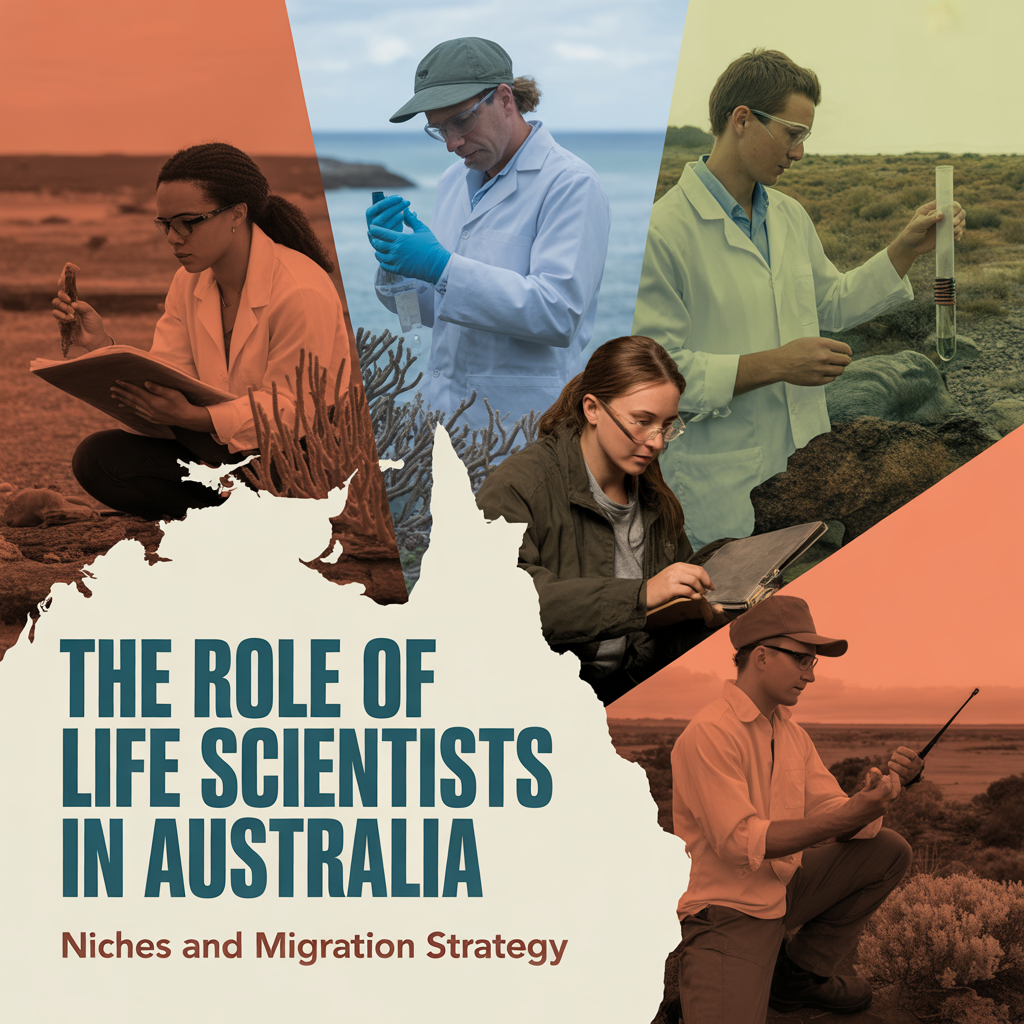
Explore roles for Life Scientists (nec) ANZSCO 234599 in Australia’s booming biotech sector. Uncover niches like genomics and vaccine development, plus migration strategies including Global Talent Visa and state nominations for permanent residency.
Introduction
Australia’s biotechnology market reached USD 12.5 billion in 2024 and projects a 7.39% CAGR through 2033, driven by innovations in health, agriculture, and environmental solutions. Life Scientists (nec) under ANZSCO 234599 fill critical gaps in this expansion, conducting research on living organisms in specialized fields. With the occupation on the Core Skills Occupation List, professionals gain access to streamlined skilled migration pathways. This article examines key niches and proven strategies to secure visas and build careers in high-demand STEM roles.
Understanding the Role of Life Scientists (nec)
Life Scientists (nec) encompass diverse specialists who study biological systems beyond classified categories, including animal behaviourists, parasitologists, non-clinical pharmacologists, and toxicologists. They design experiments, analyze data, and interpret findings to advance scientific knowledge. In Australia, these professionals operate at Skill Level 1, requiring a bachelor’s degree or higher, plus at least one year of relevant post-qualification employment.
Daily tasks involve observing biological processes, preparing reports, and presenting at conferences. They apply bioinformatics pipelines and next-generation sequencing to decode complex data sets. Unlike general life scientists, those under ANZSCO 234599 tackle niche challenges, such as assessing toxin impacts on ecosystems or modeling parasite lifecycles. This versatility positions them at the forefront of Australia’s high-demand STEM occupations, where precision drives outcomes in research and industry applications.
Employers value candidates with hands-on experience in laboratory settings. Salaries for life scientists in Australia average $88,000 to $110,000 annually, with Sydney roles reaching $119,000 including bonuses. Senior positions, especially in genomics or proteomics, often exceed $140,000, reflecting the sector’s growth amid the Australian biotech boom.
Thriving Niches in Australia’s Life Sciences Landscape
Australia’s life sciences sector employs over 48,000 in STEM jobs, with human therapeutics leading but agricultural biotechnology and food tech surging. Life Scientists (nec) excel in targeted areas like marine biotechnology, where they develop sustainable aquaculture solutions using molecular biology techniques. In synthetic biology Australia, experts engineer microbes for biofuel production, aligning with net-zero goals.
Stem cell researcher roles support regenerative medicine at institutions like the Walter and Eliza Hall Institute and Peter MacCallum Cancer Centre. CRISPR gene editing jobs dominate vaccine development and gene therapy, fueled by the Medical Research Future Fund, which invests billions in translational research. mRNA technology Australia has accelerated post-pandemic, with professionals optimizing platforms for rapid therapeutics.
Environmental genomics emerges as a key niche, addressing biodiversity loss through single-cell genomics analysis. Agricultural biotechnology Australia focuses on drought-resistant crops, employing computational biologists to integrate AI with field data. These areas span hubs like Melbourne biotechnology jobs and Sydney biotech careers, where CSIRO life scientists collaborate on national projects. Brisbane life science roles emphasize tropical applications, such as marine toxin studies at QIMR Berghofer.
Professionals in these niches leverage tools like Python/R for data analysis, contributing to a 43% sector growth since 2019. With 1,427 companies in biotherapeutics and agrifood biotech, opportunities abound for those skilled in proteomics specialist work or non-medical microbiology.
Migration Strategies: Pathways to Permanent Residency
Skilled migration for ANZSCO 234599 prioritizes candidates with VETASSESS skills assessments, confirming qualifications and experience match Australian standards. The Global Talent Visa biotechnology stream fast-tracks entry for distinguished experts, processing in 1-3 months without points tests. Eligible applicants demonstrate international recognition, such as publications in CRISPR or mRNA fields, leading directly to permanent residency.
Employer-sponsored options include the Subclass 482 visa life scientist pathway, valid up to four years under the Core Skills Occupation List. Transition to Subclass 186 ENS biotechnology for direct PR after two years of service. Regional pathways like Subclass 494 regional biotech offer five-year visas with PR eligibility post-three years, ideal for Queensland life sciences nominations.
State nomination Victoria biotechnology and state nomination Queensland life sciences provide points boosts for Subclass 491 state nominated life scientist visas. Applicants need proficient English (IELTS 7.0 equivalent) and relevant experience. The National Innovation Visa (Subclass 858), launched in 2024, targets exceptional talents with nominators of national repute, replacing prior Global Talent streams.
Secure a positive skills assessment first, then submit an Expression of Interest. Many succeed via job offers from Garvan Institute jobs or CSIRO, which sponsor under labour agreements. With processing priorities for high-demand STEM Australia roles, proactive networking on LinkedIn yields invitations within months.
Positioning for Success: Tips and Considerations
Tailor applications to niches like vaccine development scientist positions by highlighting specialized skills. Engage registered migration agents for EOI optimization. Monitor updates via the Department of Home Affairs, as 2025 quotas emphasize biotech under the National Reconstruction Fund.
Build networks at events like AusBiotech conferences. For permanent residency life scientist pathways, accumulate points through Australian study or partner skills. Regional commitments unlock concessions, such as reduced work experience for Subclass 494.
Challenges include competition in urban hubs, but niches like marine biotechnology offer less saturated entry points. Salaries support relocation, with tax incentives like the R&D Tax Incentive enhancing appeal. Focus on employability: certify proficiency in bioinformatics scientist tools to stand out.
Conclusion
Life Scientists (nec) drive Australia’s biotech innovation across health, agriculture, and environment, with robust migration routes ensuring global talent integration. Leverage niches like gene editing and state nominations for swift PR. Consult a migration expert today to assess your eligibility and launch your Australian career.