



Introduction
Australia urgently needs Other Spatial Scientists (ANZSCO 232214) who specialise in remote sensing, LiDAR, photogrammetry, and advanced geospatial analysis. Over 4,800 spatial and remote sensing jobs are advertised each year, with defence, mining, and environmental monitoring driving growth. Experienced remote sensing scientists now earn AUD 130,000–180,000+, while graduates start above AUD 100,000. This occupation sits on the Medium and Long-term Strategic Skills List, giving direct access to permanent residency. This guide explains daily responsibilities, key employers, salary levels, and the complete migration process for Other Spatial Scientist in 2025.
What an Other Spatial Scientist Actually Does in Australia
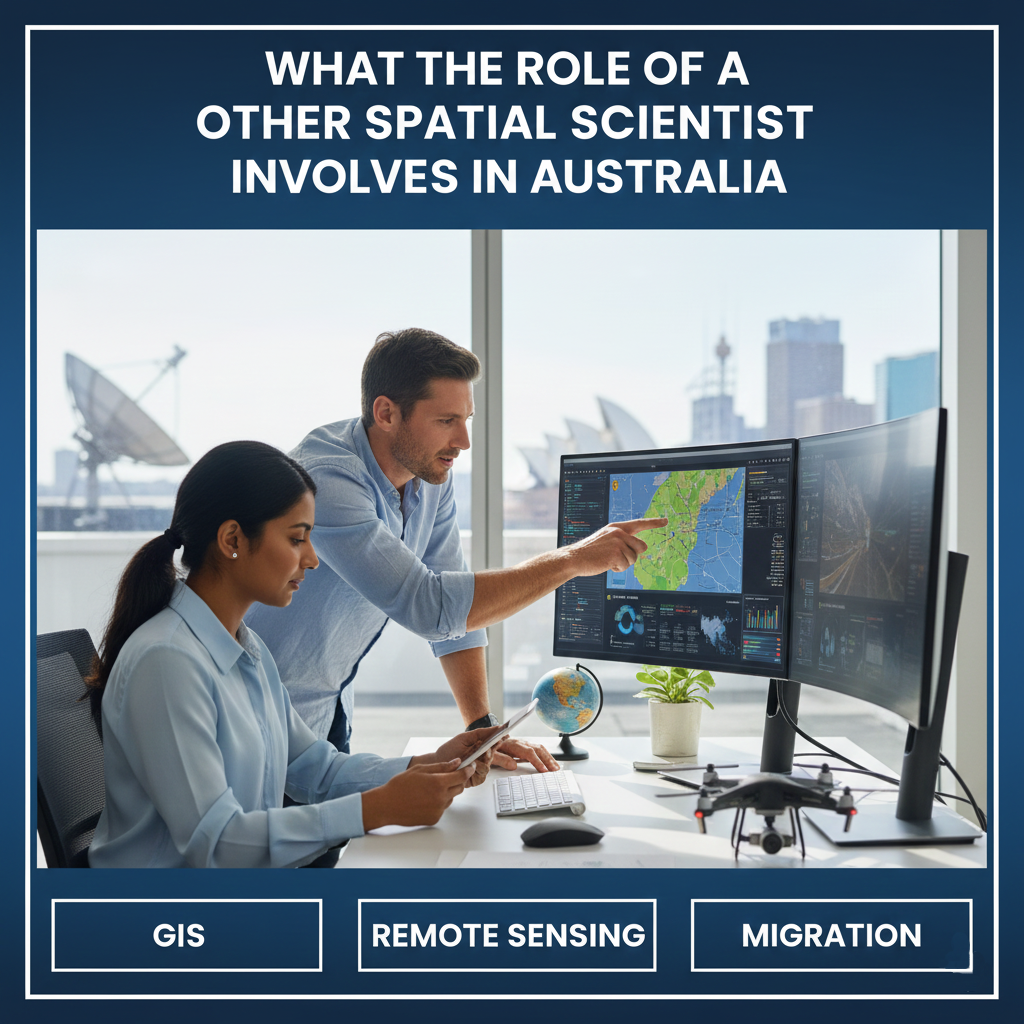
The role covers any geospatial professional who is not a pure cartographer or surveyor. Daily tasks include:
- Processing and analysing satellite imagery (optical, SAR, hyperspectral)
- Building LiDAR-derived digital elevation models and 3D point clouds
- Developing algorithms for bushfire detection, flood mapping, and vegetation monitoring
- Creating automated pipelines with Python, Google Earth Engine, or ENVI/ERDAS
- Supporting defence geospatial intelligence and mining exploration teams
Most positions are titled Remote Sensing Scientist, Geospatial Data Scientist, or Earth Observation Analyst, but they fall under the single migration code 232214 Other Spatial Scientist.
Current Demand and Hot Sectors in 2025
Canberra remains the national hub for defence and intelligence roles (Australian Geospatial-Intelligence Organisation, DSTG). Western Australia recruits heavily for mining remote sensing (Rio Tinto, BHP, Fortescue). Environmental agencies and consultancies (Jacobs, AECOM, Fugro, NGIS) hire across every state for climate-change and carbon-monitoring projects.
Fastest-growing areas:
- Real-time bushfire and flood remote sensing
- Carbon sequestration and nature-based solutions mapping
- Defence satellite constellation analysis
- UAV and high-resolution LiDAR processing
Graduate spatial scientist positions are common in government and large consultancies.
Salary Expectations by Experience and Location
- Graduate/Junior Remote Sensing Analyst: AUD 95,000 – 115,000
- Mid-level Geospatial Scientist (3–7 years): AUD 120,000 – 155,000
- Senior/Lead Remote Sensing Scientist: AUD 160,000 – 190,000+
- Defence-cleared Specialist: AUD 180,000 – 230,000+
Canberra and Perth pay 10–20% above national averages. Mining fly-in-fly-out roles often include generous allowances.
Major Employers and How to Find Jobs
Top hiring organisations:
- Defence & Government: AGO, Geoscience Australia, CSIRO, Bureau of Meteorology
- Mining: Rio Tinto, BHP, Fortescue, Newmont
- Consulting: Jacobs, AECOM, Fugro, Aerometrex, NGIS Australia
- Environment & Agriculture: State agencies, FrontierSI, Digital Earth Australia
Best job sources:
- Jobs in Spatial (dedicated geospatial board)
- SEEK alerts for “Remote Sensing”, “LiDAR”, “Geospatial Scientist”
- LinkedIn headline: “Remote Sensing Scientist | Python & SAR | Open to Australia relocation”
- SSSI (Surveying & Spatial Sciences Institute) job board
Migration Pathway for Other Spatial Scientist (232214)
VETASSESS is the sole assessing authority. A positive skills assessment requires a relevant degree (GIS, remote sensing, geomatics, geography) plus at least one year of highly relevant post-qualification experience.
Available visas:
- Skilled Independent (189) – points-tested, no sponsor
- Skilled Nominated (190) – adds 5 points (ACT, NSW, VIC, QLD, WA nominate regularly)
- Skilled Work Regional (491) – adds 15 points, very popular
- Temporary Skill Shortage (482) – defence and mining frequently sponsor
Current offshore invitation scores sit at 90–95 points for 189 and 80–85 points for 491.
Conclusion
Other Spatial Scientist (232214) offers one of the strongest combinations of salary, job variety, and migration certainty in Australia’s geospatial sector. Demand for remote sensing and Earth observation expertise will only increase. Start your VETASSESS skills assessment and targeted applications today — Australia’s spatial industry actively seeks your skills.