




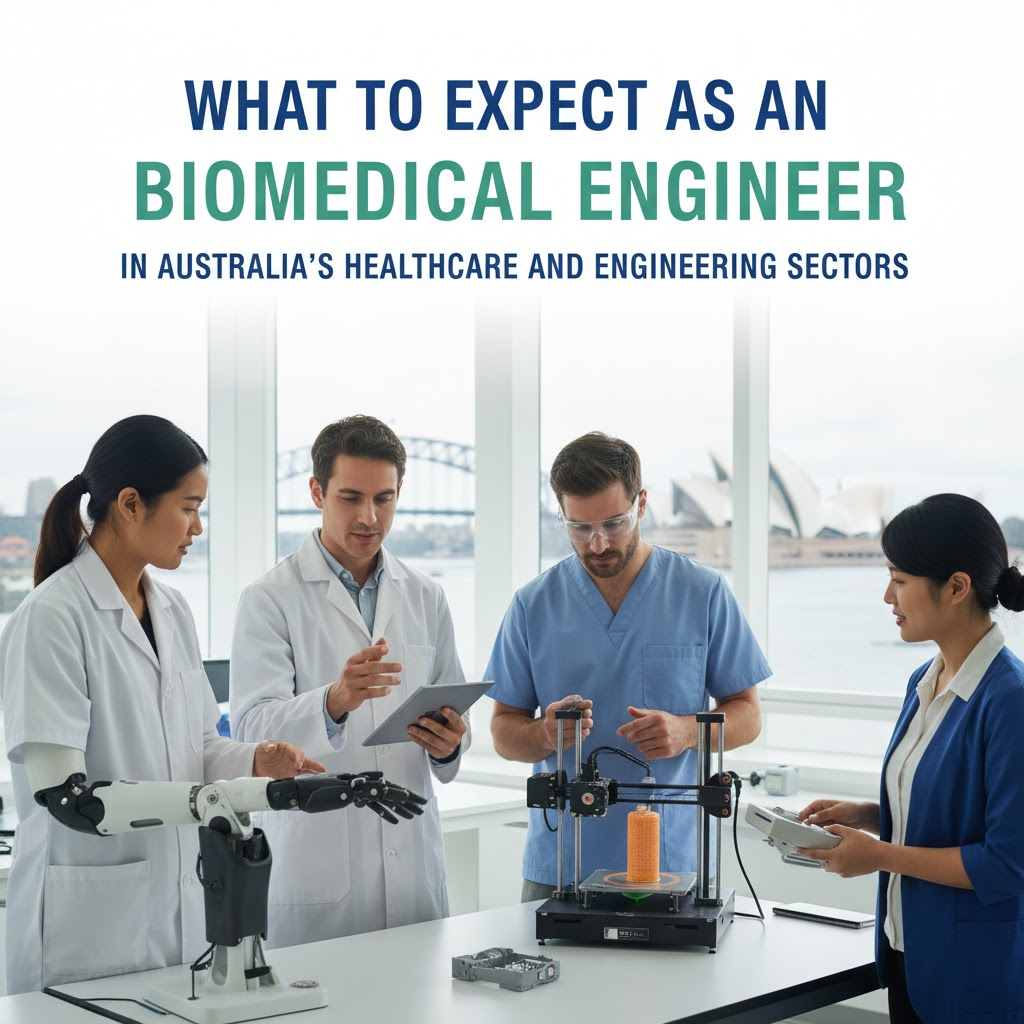
Discover what to expect as a biomedical engineer in Australia’s healthcare and engineering sectors, from job roles to salaries and growth opportunities.
Introduction
Australia’s healthcare system ranks among the world’s best, with a growing demand for skilled professionals to innovate and maintain cutting-edge medical technologies. As a biomedical engineer, you can play a pivotal role in this dynamic field, blending engineering principles with medical advancements to improve patient outcomes. Whether you’re designing medical devices, enhancing healthcare systems, or ensuring patient safety standards, a career in biomedical engineering in Australia offers diverse opportunities. This article explores what to expect in terms of roles, responsibilities, salaries, and career growth in Australia’s healthcare and engineering sectors, equipping you with insights to thrive in this rewarding profession.
What Does a Biomedical Engineer Do in Australia?
Biomedical engineering bridges engineering and medicine, focusing on developing solutions to healthcare challenges. In Australia, biomedical engineers work in hospitals, research institutions, universities, and private companies. Their roles often involve medical device development, where they design and test equipment like pacemakers, prosthetics, and diagnostic tools. Others specialize in biomechanics to improve mobility through prosthetics and orthotics or in biomaterials to create biocompatible implants.
Professionals in this field also contribute to clinical engineering, maintaining and calibrating medical equipment to meet stringent patient safety standards. For instance, ensuring an MRI machine functions flawlessly is critical to accurate diagnoses. Additionally, biomedical engineers may engage in biomedical research, collaborating with scientists to advance tissue engineering or medical imaging technologies. The Australian healthcare system values these contributions, as they directly enhance patient care and operational efficiency.
The diversity of tasks means you could work on cutting-edge projects like robotic surgery systems or wearable health monitors. With Australia’s aging population and increasing healthcare needs, the demand for such expertise continues to rise, making this an exciting time to enter the field.
Key Industries and Job Opportunities
Australia’s biomedical engineering landscape spans multiple sectors, each offering unique opportunities. In the healthcare system, hospitals and clinics employ engineers for medical equipment maintenance and technology integration. For example, you might oversee the installation of advanced medical imaging systems or ensure compliance with regulatory standards set by bodies like the Therapeutic Goods Administration (TGA).
The private sector is another major employer, with companies like Cochlear and ResMed leading in medical technology innovation. These firms focus on developing devices such as hearing implants and sleep apnea solutions, offering roles in engineering design and product testing. Universities and research institutes, such as the University of Melbourne or CSIRO, hire biomedical engineers for biomedical research in areas like tissue engineering and rehabilitation engineering.
Emerging fields like health technology assessment are also gaining traction, where engineers evaluate the cost-effectiveness and impact of new technologies. According to the Australian Government’s Job Outlook, biomedical engineering roles are projected to grow steadily, driven by advancements in healthcare technology and an emphasis on personalized medicine. Whether you prefer hands-on clinical work or research-driven innovation, Australia’s diverse sectors provide ample career paths.
Skills and Qualifications Needed
To succeed as a biomedical engineer in Australia, you need a strong educational foundation and specialized skills. Most roles require a bachelor’s degree in biomedical engineering or a related field like mechanical or electrical engineering with a biomedical focus. Postgraduate qualifications, such as a master’s or PhD, are increasingly valued, especially for research or leadership positions.
Technical skills in bioinstrumentation, biomechanics, and biomaterials are essential, as is proficiency with software for engineering design and data analysis. Familiarity with regulatory compliance ensures devices meet Australia’s strict safety standards. Soft skills, like communication and teamwork, are equally critical, as you’ll often collaborate with doctors, researchers, and policymakers.
Professional registration with Engineers Australia can enhance your credibility, particularly for roles in clinical engineering. Additionally, staying updated on medical technology innovation trends, such as AI in diagnostics or 3D-printed implants, keeps you competitive. Continuous learning is key in this fast-evolving field, where new discoveries shape healthcare delivery.
Salary Expectations and Career Growth
The salary for biomedical engineers in Australia varies by experience, location, and sector. According to recent data, entry-level biomedical engineers earn around AUD 70,000–90,000 annually, while experienced professionals can command AUD 100,000–130,000 or more. Those in senior roles or specialized fields like medical device development may earn upwards of AUD 150,000, especially in private companies or major cities like Sydney or Melbourne.
Factors influencing pay include qualifications and demand for specific skills, such as expertise in medical imaging or rehabilitation engineering. Public sector roles in hospitals may offer slightly lower salaries but provide stability and benefits. Private companies, particularly those focused on healthcare technology, often pay higher to attract top talent. Bonuses and incentives may also boost earnings in innovative firms.
Challenges and Opportunities for Immigrants
For international biomedical engineers, Australia offers a welcoming yet competitive job market. The country’s Skilled Occupation List includes biomedical engineering, making it easier to secure a skilled migration visa, such as the Subclass 189 or 190. However, challenges include obtaining local certifications and navigating regulatory compliance requirements, which may differ from your home country’s standards.
Opportunities abound due to Australia’s investment in healthcare and technology. The government’s Medical Research Future Fund supports biomedical research, creating demand for skilled engineers. Networking through professional bodies like the Australian College of Biomedical Engineers can help you build connections and access job openings. Immigrants with expertise in high-demand areas like tissue engineering or prosthetics and orthotics are particularly well-positioned for success.
Work Environment and Lifestyle
Biomedical engineers in Australia enjoy diverse work environments, from hospital wards to high-tech labs. In hospitals, you might focus on medical equipment maintenance, working closely with clinicians. In contrast, private sector roles often involve engineering design in collaborative, innovative settings. Research positions may require long hours in labs but offer the reward of groundbreaking discoveries.
Australia’s work-life balance is a significant draw. Most roles offer standard 38–40-hour workweeks, with flexible arrangements becoming more common. Major cities like Sydney, Melbourne, and Brisbane host the majority of biomedical engineering jobs, offering vibrant lifestyles, excellent healthcare, and access to nature. The high cost of living in these cities is offset by competitive salaries and a strong social safety net, making Australia an attractive destination for professionals.
Conclusion
A career as a biomedical engineer in Australia’s healthcare and engineering sectors promises diverse roles, competitive salaries, and opportunities to shape the future of medicine. From designing life-saving medical devices to advancing biomedical research, your work will directly impact patient care. With growing demand and a supportive migration system, now is the time to explore this rewarding field. Research visa options, connect with professional networks, and take the first step toward a fulfilling career in Australia.