



Introduction
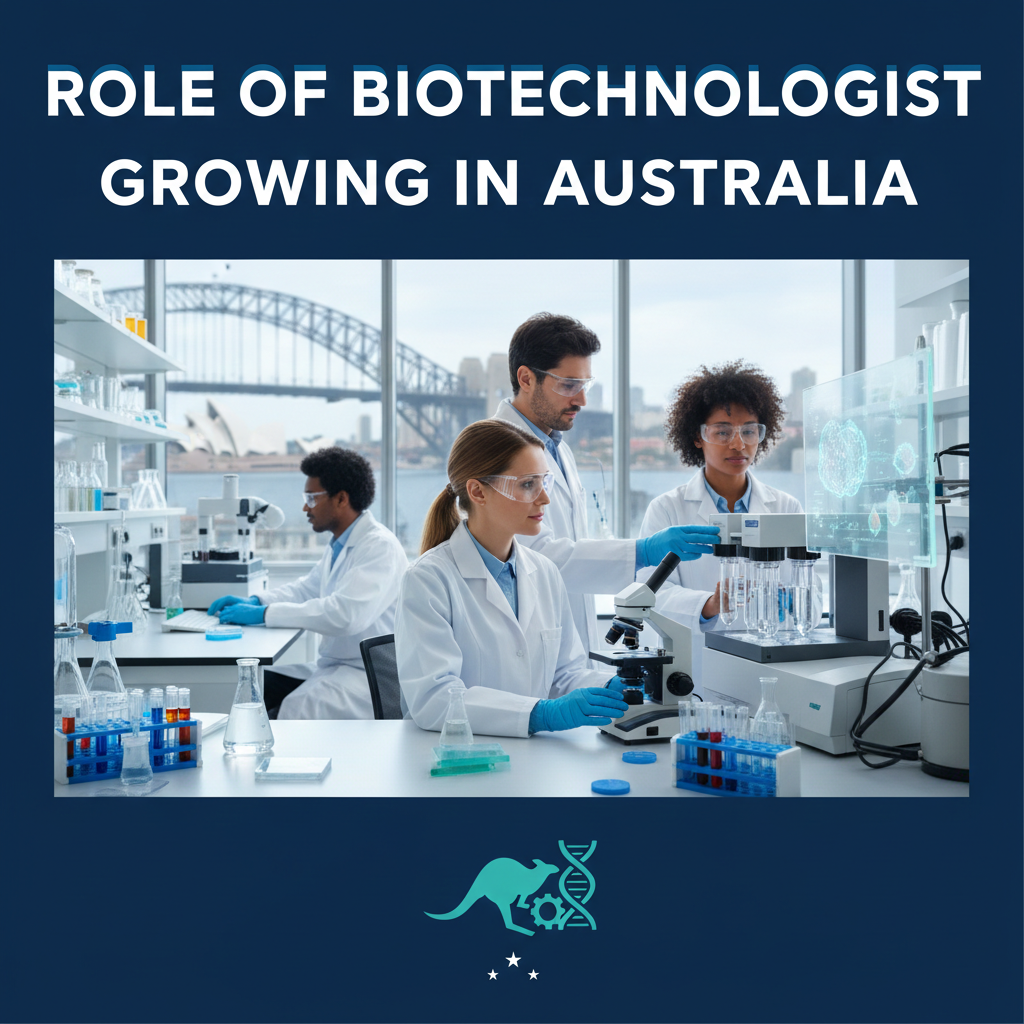
Australia’s biotechnology sector shows strong momentum in 2026. Market estimates place it between USD 13-36 billion in 2025, with projections reaching USD 24-95 billion by the mid-2030s at CAGRs of 7-10% or higher in some forecasts. This expansion stems from government R&D tax incentives, increased venture capital, university-industry partnerships, and focus on personalized medicine Australia, agri-biotech opportunities Australia, and digital biotech Australia. Biotechnologists drive these advances by researching organisms, developing biopharmaceuticals, diagnostics, and sustainable solutions. For overseas applicants, this growth signals excellent migration prospects biotechnologist Australia amid biotech talent shortage Australia.
The Booming Biotechnology Sector in Australia
Australia’s biotechnology industry ranks highly globally for innovation. It supports high-value jobs in life sciences jobs Australia, with clusters in Victoria, New South Wales, and Queensland leading clinical trials, medtech, and research.
Key drivers include the Research and Development Tax Incentive, which lowers barriers for startups and established firms. Biotech startups Australia flourish, backed by funds and collaborations. The sector addresses chronic diseases, environmental challenges, and food security through innovations like gene therapies and synthetic biology.
Employment grows steadily. Biotechnologist roles (ANZSCO 234514) involve studying living organisms, isolating molecules, and creating applications in pharma, agriculture, and industry. With around 950 employed biotechnologists and rising demand, the field offers stability and advancement.
Recent trends highlight hybrid roles combining biotech with AI and data science, intensifying biotech talent shortage Australia. Companies struggle to fill specialized positions, creating openings for skilled professionals.
This sector growth translates to more biotechnology jobs Australia, from lab research to product development in biotech R&D Australia.
Implications for Overseas Biotechnologists
The expansion creates favorable conditions for skilled migration biotechnologist applicants. Biotechnologist remains on skilled occupation lists, enabling access to permanent and provisional visas.
First, obtain a positive skills assessment from VETASSESS. As a Group A occupation, it requires a bachelor’s degree or higher in a highly relevant field (e.g., biotechnology, molecular biology) plus at least one year of post-qualification relevant employment in the last five years.
Visa pathways include:
- Skilled Independent visa (subclass 189): Points-tested, no sponsor needed. Invitations depend on points; recent rounds show competitive thresholds around 85-90+ for science roles.
- Skilled Nominated visa (subclass 190): State or territory nomination adds points and requires commitment to live in the nominating area.
- Skilled Work Regional visa (subclass 491): Provisional, state-nominated or family-sponsored, leading to permanent residency. Regional areas often prioritize science roles.
Employer-sponsored options like Skills in Demand visa (replacing TSS subclass 482) suit those with job offers, potentially leading to permanent pathways.
States nominate for subclass 190 and 491, with allocations supporting STEM fields. Biotech talent needs make employer sponsored biotechnologist Australia viable, especially in growing firms.
Overseas biotechnologist Australia applicants benefit from talent shortages in specialized areas. Strong English skills, qualifications, and experience boost points and chances.
Challenges include competition for independent invitations and state-specific criteria, but regional biotech roles offer easier nomination paths.
Overall, migration prospects biotechnologist Australia look promising in 2026, with biotech visa pathways 2026 supporting global talent entry.
Conclusion
Australia’s biotechnology sector growth creates expanding opportunities for biotechnologists and strong incentives for overseas talent. With talent shortages and supportive visa options, qualified applicants can build rewarding careers here. Assess your eligibility, pursue skills assessment, and explore state nominations to take the next step.